A commercial building that's bleeding heat rarely announces it with a single obvious sign — it shows up as a stack of small clues that add up to one expensive problem. This guide walks through exactly how to know if a commercial building needs re-insulation, step by step, using the same checks a spray foam crew runs before quoting a retrofit.
- Utility bills climbing 15-20% year over year with no rate hike is the clearest sign a commercial building needs re-insulation in 2026.
- Visible frost on interior roof decks or compressed batt insulation means the thermal envelope has already failed.
- Warehouses and cold storage buildings show heat loss fastest because of high ceiling volume and constant HVAC cycling.
- A thermal imaging scan before a quote beats guessing — it pinpoints exactly which bays or walls need spray foam.
- Buildings insulated before 2005 in Alberta almost always fall short of current commercial energy code minimums.
Why this matters
A warehouse or shop that's under-insulated doesn't just cost more to heat — it forces the HVAC system to run longer cycles, which shortens equipment life and drives up maintenance calls. In commercial spray foam insulation for warehouses, the pattern is consistent: buildings with gaps in the envelope see furnaces or rooftop units cycling almost continuously through Alberta's coldest months.
Property owners often wait until tenants complain about cold spots or humidity before acting, but by then the insulation has usually been failing for a couple of seasons already. Catching it early through a structured inspection saves both energy cost and the bigger repair bill that comes from moisture damage sitting behind drywall or metal cladding.
What you'll need
- 12-24 months of utility bills (gas and electric) for year-over-year comparison
- A flashlight and a ladder or roof access for a visual attic/ceiling check
- A thermal imaging camera, or a contractor who brings one to the site visit
- Building plans or a note of the insulation type installed and the year it went in
- A notepad to log cold spots, drafts, and moisture stains by location
The steps
1. Pull two years of utility bills and compare month to month
This is the fastest way to catch a slow insulation failure before it becomes visible. Line up the same month across two or three years — if heating costs are up 15% or more with no rate change from the utility, the building envelope is the most likely cause. A sudden jump after a specific season (say, right after a hard winter) often points to insulation that compressed or shifted during a freeze-thaw cycle.
Common mistake: blaming the jump on HVAC age alone. Old insulation and an aging furnace often fail together, but replacing the furnace without touching the insulation just means the new unit works just as hard as the old one.
2. Do a visual check of the roof deck, attic, or ceiling cavity
Walk the roof deck or crawl the ceiling cavity and look for insulation that's compressed, sagging, or discoloured. Batt insulation that's been walked on, soaked, or nested in by pests loses most of its R-value even though it still looks like it's in place from below. Spray foam that's cracked, pulling away from framing, or yellowed with age has usually lost its air-seal, which is the part doing most of the work.
Common mistake: checking only the easily accessible middle of the roof and skipping the perimeter, where thermal bridging and gaps are most common.
3. Look for frost, condensation, or staining on interior surfaces
Frost on the underside of a metal roof deck, or condensation streaking down interior walls in winter, is a direct sign that warm moist air is reaching a cold surface — meaning the insulation and air barrier aren't doing their job. This shows up fastest in commercial spray foam insulation for cold storage facilities, where the temperature differential between inside and outside is extreme year-round.
Common mistake: wiping down the frost or condensation and moving on without checking for the insulation gap causing it.
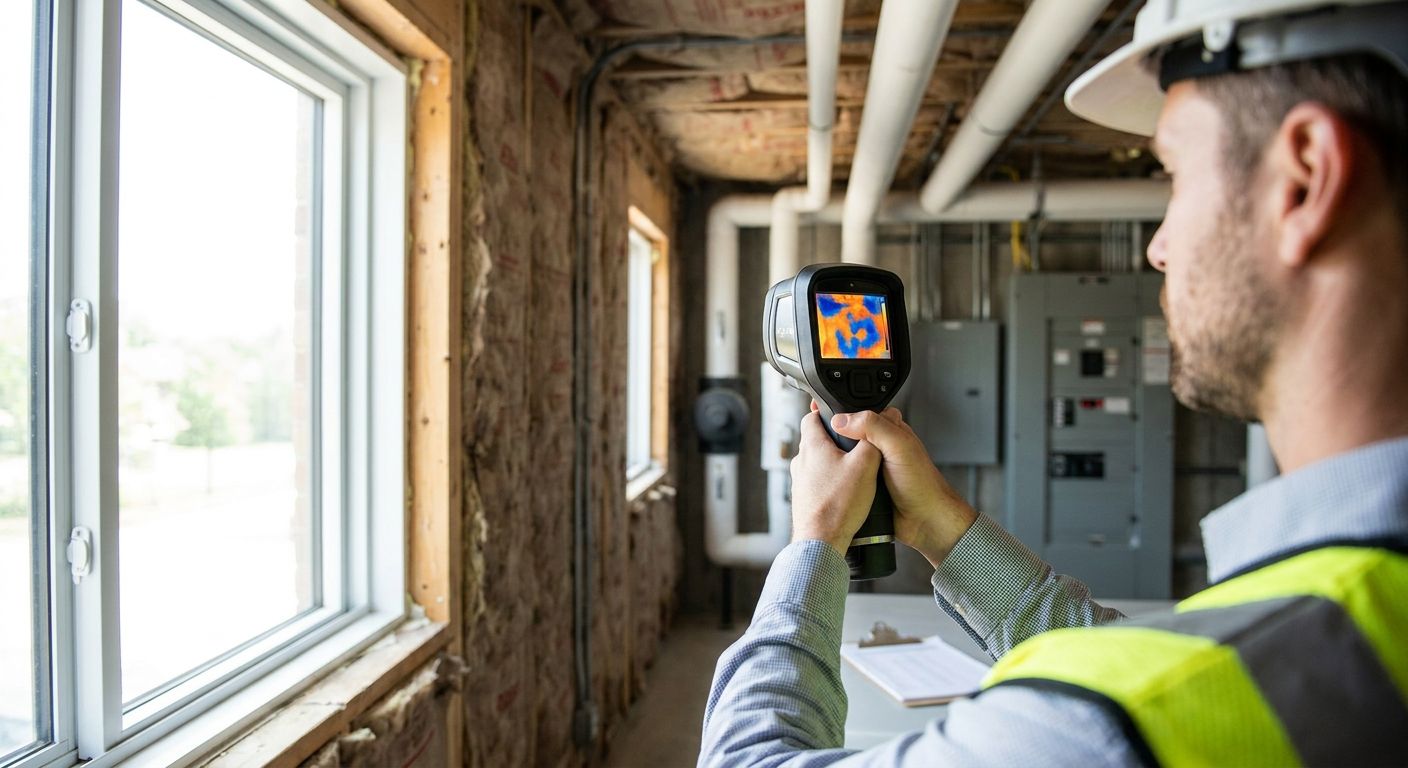
4. Run a thermal imaging scan of exterior walls and roof
A thermal camera makes the invisible visible — cold spots on an infrared scan map directly to where insulation is thin, missing, or compressed. Scans work best on a cold night (below -5°C is ideal for Alberta) with the building's heating system running normally. This step turns a guess into a floor plan showing exactly which bays need attention first.
Common mistake: scanning during mild weather, which produces a flat, low-contrast image that hides real gaps.
5. Check HVAC run-time and cycling patterns
If rooftop units or furnaces are running near-continuously to hold a setpoint that used to be easy to maintain, the envelope is compensating for lost insulation. Log thermostat call-for-heat frequency over a week during a cold stretch and compare it to what the system was rated to handle. Short cycling or units that never fully satisfy the thermostat both point to heat loss outpacing the equipment's output.
Common mistake: assuming louder or more frequent cycling means the HVAC unit itself is failing, without ruling out the insulation first.
6. Match insulation age against current code minimums
Commercial buildings insulated before the mid-2000s were built to lower R-value standards than what's expected today, and metal buildings in particular were often insulated with a single layer of batt that was never adequate for Alberta winters. If nobody on staff knows the age or type of insulation installed, that's itself a sign a professional assessment is overdue — you can't manage what you can't identify. Metal-clad shops and pole buildings are a common blind spot here, as covered in spray foam insulation for metal buildings.
Common mistake: assuming a building is fine because it's never been renovated — untouched original insulation from the 1990s or earlier is almost always underperforming by 2026 standards.
7. Get a professional assessment before committing to a re-insulation quote
Once the bill trend, visual inspection, thermal scan, and HVAC data are in hand, a contractor can quote accurately instead of guessing at square footage and thickness. This is also the point where you find out whether the fix is a full re-insulation or a targeted repair to specific bays or rim joists.
Common mistake: getting a quote based on square footage alone without sharing the thermal scan or utility data, which leads to under-scoped bids.
Get a commercial insulation assessment
Talk to Aztec Spray Systems about a site visit for your Calgary-area building.
Troubleshooting
- Bills went up but the inspection looks clean. Check for air leaks at loading dock doors, roof penetrations, and wall penetrations — insulation can be intact while the air barrier around it fails.
- Thermal scan shows cold spots but no visible insulation damage. The gap is likely inside the wall or roof assembly itself; a borescope inspection through a small access hole confirms it without opening the whole wall.
- One zone is always cold while the rest of the building is fine. That's usually a localized insulation void or a section that was never fully filled during original construction — spot-check that zone first before assuming the whole envelope needs work.
- Frost keeps returning even after patching. A patch without an air seal just moves the condensation point somewhere else; the fix needs to close the air leak, not just add material.
- HVAC contractor recommends a bigger unit instead of insulation. Get a second opinion — oversizing equipment to compensate for a leaky envelope raises operating costs permanently instead of fixing the root cause.
Tools and resources
- Two years of utility bills, gas and electric, side by side
- Thermal imaging camera or a contractor visit that includes one
- Ladder or roof access equipment for a visual check
- A written log of cold spots, frost, and staining by location and date
- Building insulation age and type, pulled from original plans if available
What to do next
Once you've confirmed the building needs work, the next question is what R-value and material actually fit Alberta's climate and your building type — that's covered in how much does spray foam insulation cost in Calgary, which breaks down pricing by square footage and application.
FAQ
How do I know if my commercial building needs re-insulation?
Compare 12-24 months of utility bills for unexplained increases, check for frost or compressed insulation during a visual inspection, and run a thermal imaging scan on a cold night. If two or more of these point the same direction, the building needs re-insulation.
What’s the biggest sign of insulation failure in a warehouse?
Heating bills climbing without a rate change, paired with HVAC units running near-continuously to hold setpoint, is the clearest sign in a warehouse. High ceiling volume means heat loss shows up fast once insulation compresses or fails.
How much does commercial re-insulation cost in Calgary in 2026?
Cost depends heavily on square footage, ceiling height, and whether it’s a full re-insulation or a targeted repair. Getting a site-specific quote after a thermal scan gives a far more accurate number than a general estimate.
Is spray foam better than batt insulation for commercial buildings?
Spray foam seals air gaps that batt insulation can’t, which matters most in metal buildings and cold storage facilities where condensation is a constant risk. Batt can still work in some applications, but it needs a tighter air barrier to perform the same way.
How often should a commercial building’s insulation be re-assessed?
Every 5-10 years for a visual and utility-bill check, and sooner if the building is over 20 years old or has had a roof or wall repair. Buildings insulated before the mid-2000s in Alberta are the most likely candidates for an update.
Can old insulation cause ice damming or roof frost?
Yes — heat escaping through a compressed or gapped insulation layer melts snow unevenly on the roof, which refreezes at the eaves and causes ice damming. Frost on an interior roof deck is the same root cause showing up from inside the building.
Does a thermal imaging scan replace a full inspection?
No, a thermal scan should be paired with a visual inspection and utility bill review for an accurate picture. The scan shows where heat is escaping, but a visual check confirms whether it’s insulation damage, an air leak, or both.
What insulation type holds up best in Alberta winters?
Closed-cell spray foam performs well in Alberta’s temperature swings because it seals air gaps and resists moisture better than most batt products. The right choice still depends on the building type and application, so a site assessment matters more than a blanket recommendation.
One last thing
The single most overlooked check on this list is the utility bill comparison — most property managers glance at the total dollar figure each month instead of lining up the same month year over year, which is the only way a slow insulation failure actually shows up in the numbers before it becomes a visible problem.
Related guides
- Commercial spray foam insulation for cold storage facilities
- Best insulation type for Alberta winters
- Spray foam insulation for pole barns and shops