Polyurethane foam insulation offers you exceptional protection against Calgary's harsh climate, with closed-cell variants providing R-values up to 6.7 per inch. You'll notice up to 30% reduction in utility bills thanks to its superior air-sealing properties and continuous barrier formation. It's particularly effective in temperatures as low as -30°C, while simultaneously strengthening your walls by up to 300%. The foam's moisture-resistant properties protect your home from snow and rain damage, and its quick-curing formula allows for same-day occupancy. By considering spray foam's extensive benefits, you'll uncover why it's Calgary's premier insulation choice for long-term property protection and value improvement.
Key Takeaways
- Protects homes against Calgary's extreme temperatures down to -30°C while creating an effective air barrier against drafts.
- Reduces utility bills by up to 30% through superior insulation properties and reduced HVAC system strain.
- Provides excellent moisture resistance, protecting Calgary homes from water damage caused by snow and rain.
- Offers high R-values between 5.1 and 6.7 per inch, ensuring optimal thermal performance in Calgary's harsh climate.
- Creates a seamless, continuous insulation layer that strengthens walls by up to 300% while meeting local NECB requirements.
Understanding Spray Foam Types
When considering spray foam insulation for your Calgary property, understanding the fundamental differences between open-cell and closed-cell foam types is critical. Each type offers distinct performance characteristics that'll impact your insulation strategy.
Open cell spray foam excels at expansion and sound dampening, though it provides a lower R value compared to its closed-cell counterpart. You'll find closed cell foam delivers superior heat transfer resistance, with R values ranging from 5.1 to 6.7 per inch, making it one of the most efficient insulation materials available. What's more, closed cell foam strengthens your wall structure by up to 300%, offering improved protection against Calgary's severe weather conditions. When selecting between these options, you'll need to evaluate your specific requirements for energy savings, moisture resistance, and acoustic performance.
Energy Savings and Cost Benefits
Understanding spray foam types feeds directly into their remarkable cost-benefit profile. When you choose polyurethane foam insulation, you'll experience up to 30% reduction in utility bills through superior thermal resistance and air leak prevention.
| Feature | Benefit |
|---|---|
| High R-value | R-5.1 to R-6.7 per inch efficiency |
| Air Sealing | Reduced HVAC system strain |
| Energy Savings | Up to 30% lower utility costs |
| Longevity | Fewer replacements needed |
| Property Value | Improved resale potential |
The high R-value of closed-cell foam creates an environmentally friendly barrier that optimizes your home's energy efficiency. Your HVAC system won't need to work as hard, resulting in reduced maintenance costs and extended equipment life. While the initial investment may be higher than traditional insulation methods, you'll recover costs through consistent energy savings and increased property value over time.
Weather Protection in Calgary
Given Calgary's harsh climate extremes, polyurethane foam insulation provides essential protection against temperatures plummeting to -30°C and severe weather fluctuations. This advanced insulation material creates an impenetrable air barrier that effectively blocks drafts and prevents heat loss throughout your building's envelope.
When you choose closed cell spray foam for your building insulation, you'll benefit from its superior R-value of up to 6.7 per inch, delivering exceptional thermal performance during Alberta's bitter winters. The spray application guarantees a seamless barrier that not only insulates but also resists moisture infiltration. This dual protection shields your property from potential water damage caused by heavy snowfall and rain. The material's durability means you won't need frequent replacements, making it an ideal solution for Calgary's challenging climate conditions.
Installation Process and Requirements
Professional installation of polyurethane foam insulation demands strict adherence to Calgary's NECB Energy code requirements and safety protocols. You'll need licensed professionals who understand local building codes to guarantee your installation meets all regulations.
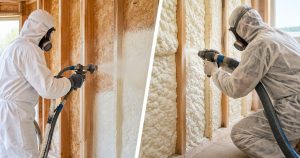
Before the foam insulation can be applied, your surfaces must be properly prepared – clean, dry, and free from any contaminants that could compromise the adhesion. The installation team will use specialized equipment to mix and spray the foam, which is then expanded to create an airtight seal throughout your space. Safety measures are paramount during this process, with installers wearing crucial PPE including respirators and protective gloves to guard against isocyanate exposure. Once applied, you'll appreciate the quick curing time, typically allowing you to occupy the space within hours of completion.
Environmental Impact and Sustainability
Three key environmental benefits make polyurethane foam insulation a sustainable choice for Calgary properties. You'll reduce greenhouse gas emissions through significant energy savings while supporting eco-friendly construction practices. The material's extended durability minimizes waste, and its renewable resource composition aligns with LEED certification requirements.
| Environmental Factor | Impact Assessment |
|---|---|
| Energy Efficiency | Up to 30% savings |
| Material Longevity | Outlasts traditional options |
| Resource Type | Renewable materials |
| Environmental Impact | Low GWP with HFO agents |
Health and Safety Considerations
Understanding the health implications of polyurethane foam insulation requires careful attention to both its installed and application phases. While cured closed-cell spray foam is safe for indoor air quality, you'll need to focus on proper safety measures during installation to prevent health risks.
Key safety requirements include:
- Professional installers must wear proper protective equipment, including full face masks and respirators
- Adequate ventilation systems must be in place during application to minimize exposure to isocyanates
- Installation techniques must follow strict protocols to prevent air leakage and subsequent mold growth
You can trust that properly installed polyurethane foam won't pose ongoing health concerns. The material actually improves your indoor environment by creating an effective barrier against moisture and airborne pollutants when correctly applied by licensed professionals.