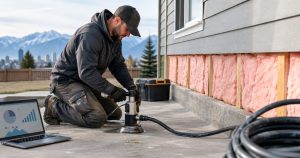
Commercial buildings in Alberta often deal with heat loss and moisture problems due to long, cold seasons and temperature changes. Aztec Spray Foam Insulation Systems provides insulation solutions across Calgary and Southern Alberta that help improve building performance and indoor comfort. One effective method used in many commercial projects is spray foam insulation, which helps reduce air leakage and supports better temperature control inside large buildings.
Many property owners are now turning to energy-efficient spray foam insulation to reduce wasted heating and cooling. This type of insulation forms a continuous barrier that limits air movement and helps control condensation inside walls and roof systems. Commercial spray foam insulation is commonly used in warehouses, offices, and industrial spaces where energy efficiency and building protection are important for long-term operation.

Heat Loss and Moisture Challenges
Commercial properties in Alberta often deal with uneven indoor temperatures and moisture buildup during colder seasons. These issues usually develop slowly and become more noticeable in large buildings where multiple materials and systems connect within the structure.
Why Energy Loss Happens in Commercial Structures
Heat loss in commercial buildings often occurs through small gaps around joints, wall connections, roof transitions, and framing points. These openings allow warm air to escape and cold air to enter, increasing heating demand during colder months. Spray foam insulation fills these spaces and forms a continuous seal, helping reduce air movement and maintain steadier indoor temperatures.
How Moisture and Condensation Develop Indoors
Moisture issues develop when warm indoor air comes into contact with colder surfaces inside a building. This leads to condensation on metal framing, roof systems, and wall cavities, especially during Calgary winters. Spray foam insulation in Calgary helps reduce air leakage through walls and ceilings, limiting airflow and lowering the chances of condensation forming on internal surfaces over time.
Common Building Areas Where Problems Start
Heat loss and air leakage in commercial buildings usually begin in specific structural zones where sealing is difficult or incomplete.
- Roof decks: Large spans with joints that often allow heat escape.
- Wall joints: Connection points that create small air gaps.
- Structural connections: Beam and panel interfaces with minor leakage points.
- Mechanical penetrations: Openings for pipes, ducts, and wiring that let air pass through.
Over time, these areas affect indoor temperature stability and increase energy loss if not properly sealed.
How Commercial Spray Foam Insulation Works
Commercial spray foam insulation supports building performance by sealing air paths and limiting moisture transfer through the building envelope. It is applied as a liquid that expands on contact, forming a solid layer once cured.
How Spray Foam Seals Air Leaks
Spray foam expands during application and fills cracks, joints, and small openings in walls, roofs, and structural connections. This expansion creates a continuous layer that reduces uncontrolled air movement between indoor and outdoor spaces. As a result, temperature fluctuations inside the building become more stable across different areas.
How It Blocks Moisture Movement
Once cured, spray foam forms a dense barrier that restricts moisture from passing through wall and roof assemblies. This helps reduce conditions where condensation forms within building materials. Limiting moisture movement also lowers the risk of material deterioration over time, especially in structures exposed to seasonal temperature changes.
Why Closed-Cell Foam Performs Well in Cold Climates
Closed-cell spray foam has a dense structure that slows heat transfer and provides strong resistance to moisture. This makes it suitable for commercial applications in Alberta, where cold winters and temperature swings are common. In projects involving energy-efficient spray foam insulation, this material helps maintain more stable indoor conditions while improving building envelope performance.
Energy Efficiency Benefits for Commercial Properties
Commercial buildings often face high energy consumption due to heat loss through the building envelope and uneven insulation performance. When air escapes through gaps in walls, roofs, and structural joints, heating and cooling systems must work longer to maintain indoor comfort. Improving how a building is sealed has a direct effect on how much energy is used throughout the year.
How Air Sealing Lowers Heating Demand
Air leakage is one of the main reasons commercial buildings lose heat during colder months. Warm air moves out through small openings while cold air enters through the same paths. This continuous exchange increases the load on heating systems.
Reducing these leaks helps stabilize indoor temperatures and lowers unnecessary energy use. According to the U.S. Department of Energy, air sealing is one of the most effective ways to reduce uncontrolled air movement in buildings.
What Reduced Energy Use Means for Operating Costs
Buildings that incorporate energy-efficient spray foam insulation often experience reduced heating and cooling demand over time. Better control of heat flow means HVAC systems do not need to operate as frequently to correct temperature shifts. This can lead to more predictable energy usage and steadier utility expenses for commercial property owners, especially in regions with long heating seasons like Alberta.
Stable Indoor Temperatures
Consistent indoor temperatures help maintain smoother business operations. Equipment functions under more stable conditions, and work environments remain more comfortable for staff and customers. Reduced temperature fluctuations also place less strain on HVAC systems, supporting consistent performance and reducing the likelihood of frequent system adjustments during seasonal changes.
Structural and Environmental Benefits Beyond Insulation
Commercial spray foam insulation contributes to more than temperature control. It also supports building stability and improving internal environmental conditions across different types of commercial spaces.
Reinforcing Walls, Roofs, and Building Shells
Spray foam bonds to surfaces as it expands, adding stiffness to walls, roof assemblies, and structural components. This added rigidity helps improve resistance to wind pressure, temperature shifts, and general structural movement over time. In commercial buildings, this can support longer-lasting building envelopes with fewer weak points.
Sound Reduction in Active Work Environments
The dense structure of cured spray foam helps reduce sound transmission through walls and ceilings. This is useful in environments such as warehouses, workshops, and office buildings where machinery, equipment, or general activity levels create constant background noise. Reduced sound transfer helps create more controlled working conditions within the space.
Supporting Healthier Indoor Air Conditions
Air leaks often allow outdoor pollutants, dust, and moisture to enter commercial buildings. By limiting these entry points, spray foam helps reduce the movement of unwanted particles through the building envelope. This also lowers the chance of moisture buildup inside wall cavities, which can contribute to material degradation over time.
Where Spray Foam Delivers the Strongest Impact
Different commercial buildings in Alberta face different insulation challenges depending on size, structure, and exposure to weather. Spray foam insulation performs well in environments where air leakage control and temperature stability matter for daily operations.
Industrial and Warehouse Facilities
Large industrial buildings and warehouses often have wide open layouts with high ceilings and multiple structural joints. These conditions allow heat to escape more easily if gaps are not properly sealed. Spray foam helps reduce air loss and supports more consistent indoor temperatures, which is important for storage areas and equipment protection.
Agricultural Buildings, Barns, and Quonsets
Agricultural structures are regularly exposed to wind, moisture, and temperature swings. Gaps in walls and roofing systems can allow outdoor air to enter freely, affecting internal conditions. Sealing these openings helps improve building durability and maintains more stable interior environments for equipment, feed, or livestock-related storage.
Commercial Offices and Retail Spaces
Office and retail environments require steady indoor comfort for occupants and customers. Air leakage can create uneven temperatures across different zones of the building. Spray foam insulation helps reduce these variations and supports more controlled energy use throughout daily operations.
Why Businesses Choose Aztec Spray Foam Insulation Systems
Commercial property owners across Alberta often choose insulation providers based on experience, reliability, and understanding of local building conditions. At Aztec Spray Foam Insulation Systems, we serve Calgary and surrounding regions where long heating seasons and temperature swings affect building performance, and we focus on delivering solutions that match these demands.
More Than 15 Years of Insulation Experience
At Aztec Spray Foam Insulation Systems, we bring more than 15 years of hands-on experience in spray foam applications across commercial and residential projects. Over the years, we have worked on warehouses, industrial facilities, retail spaces, agricultural buildings, and office environments. Each structure comes with its own set of challenges, especially when it comes to air leakage, moisture control, and thermal performance.
This experience has helped us refine our approach to different building conditions and materials. Commercial projects often require careful attention to detail due to their size and complexity. Our focus is on delivering consistent application quality across every project, whether it involves a small upgrade or a large-scale installation.
Solutions Designed for Alberta Climate Conditions
We design our insulation solutions with Alberta’s climate in mind. Cold winters, freeze-thaw cycles, and seasonal temperature shifts place continuous pressure on building envelopes. These conditions make it important to address air movement and heat loss effectively.
Our work with commercial spray foam insulation is structured to help reduce air leakage through walls, roofs, and structural connections. The material expands into gaps and forms a continuous barrier that supports more stable indoor conditions throughout the year. In many cases, energy-efficient spray foam insulation helps reduce heat loss through areas that traditional insulation systems may not fully seal.
Service Coverage Across Calgary and Southern Alberta
We provide services across Calgary and surrounding communities, including Okotoks, High River, Lethbridge, and other parts of Southern Alberta. Many commercial property owners reach out for spray foam insulation in Calgary to improve energy performance and address ongoing insulation concerns in older or underperforming buildings.
Every location comes with different structural conditions and usage requirements. We adjust our approach based on the building type, age, and specific performance goals of the property owner.
Clear Communication From Estimate to Completion
Each project begins with a detailed site review and consultation. During this stage, we identify key areas such as air leaks, insulation gaps, and moisture-prone sections of the building. Once the scope is defined, we provide clear details on the application process before work begins.
Throughout the project, we maintain open communication so timelines, access requirements, and expectations remain aligned. After completion, we conduct a final review to confirm that the installation meets the intended project requirements and building needs.
Get a Commercial Spray Foam Assessment Today
Stronger insulation performance starts with the right building approach. Connect with Aztec Spray Foam Insulation Systems to schedule an assessment and explore the best solution for your commercial property. Call us at (587) 609-5660 or contact us here to book your free insulation consultation today.