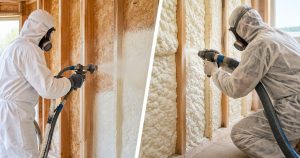
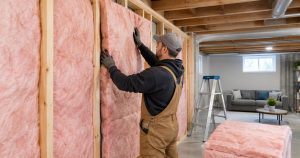
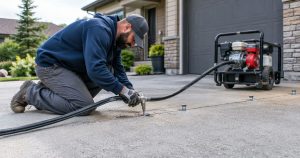
You'll find professional spray foam insulation installation in Calgary offers significant advantages over DIY approaches. While DIY costs initially appear lower ($1,500 for open-cell foam per 1,500 sq ft), professionals deliver 10-15 year lifespans versus shorter DIY durability. Expert contractors guarantee proper R-value compliance with Alberta Building Code, use industrial-grade equipment, and complete installations in 1-2 days compared to DIY's 3-7 days. They'll also manage technical challenges like foam expansion and ventilation requirements that often compromise DIY results. Consider how your insulation choice affects both immediate costs and long-term energy savings.
Key Takeaways
- Professional installation in Calgary requires permits and code compliance, while DIY risks non-compliance with local building regulations and penalties.
- Licensed contractors complete installation in 1-2 days versus 3-7 days for DIY, using industrial-grade equipment for optimal results.
- DIY costs ($1,500-$2,250 for 1500 sq ft) may increase due to equipment rental and potential repair expenses from installation errors.
- Professional installations last 10-15 years with proper energy efficiency, while DIY installations often have shorter lifespans due to technique issues.
- Professionals conduct pre-installation assessments and manage technical challenges like foam expansion and ventilation for safer, more effective results.
Understanding Spray Foam Basics
While traditional insulation methods have their place, Spray Polyurethane Foam (SPF) stands out as a superior insulation solution, capable of reducing energy loss by up to 50% through its thorough air-sealing properties.
You'll find two primary options in spray foam insulation: closed-cell spray foam, which delivers superior R-value and moisture resistance, and open-cell, which offers a more budget-friendly alternative. The foam's unique expanding properties guarantee complete insulation coverage, effectively filling gaps and cracks in hard-to-reach areas. For maximum effectiveness, closed-cell applications require 10-14 inches of thickness to achieve an R-value of 40. However, proper installation by skilled installers is critical – improper application can result in inadequate coverage, over-expansion, or gaps that compromise the insulation's performance. These factors directly impact your energy efficiency and comfort level.
DIY Installation Cost Analysis
Understanding the cost implications of DIY spray foam insulation requires careful analysis of multiple financial factors. When calculating your insulation needs, you'll find significant differences between open-cell and closed-cell foam options, with costs ranging from $1 to $1.5 per board foot respectively.
Consider these key cost elements for your installation job:
- Basic materials for a 1500 sq ft home can cost $1,500 for open-cell foam or $2,250 for closed-cell foam at one-inch thickness
- Further equipment rental and tools can push costs beyond the initial $50 per cubic foot estimate
- Mistakes in DIY installation may lead to expensive repairs, potentially offsetting initial savings
While DIY spray foam insulation might seem cost-effective, hiring a professional often provides better long-term energy savings and guarantees proper installation that meets building codes.
Professional Services Worth
Professional spray foam insulation services deliver measurable value through certified expertise and specialized equipment that improve your investment's effectiveness. When you're weighing your options between DIY and hiring an insulation contractor, consider that licensed contractors guarantee code compliance while minimizing installation risks.
| Service Aspect | Professional | DIY |
|---|---|---|
| Code Compliance | Guaranteed | Limited |
| Equipment Quality | Industrial-Grade | Consumer-Grade |
| Installation Time | 1-2 Days | 3-7 Days |
Your investment in professional services, ranging from $1,000 to $20,000, translates to superior energy efficiency and high-quality installation. Insulation professionals conduct thorough pre-installation assessments, identifying potential structural issues that could compromise performance. You'll benefit from their specialized equipment and expertise, assuring proper application density and coverage that optimizes long-term energy savings.
Common Application Challenges
Despite careful preparation, spray foam insulation installations face several technical challenges that can impact project success. You'll encounter vital issues that can affect how foam insulation works, particularly when proper cleaning and maintenance protocols aren't followed.
- Improper canister connections and hose clogs can disrupt the spray foam insulation installation process, leading to uneven coverage and material waste.
- Unpredictable foam expansion requires constant monitoring to prevent structural damage and excessive waste during application.
- Insufficient ventilation poses serious risks from chemical off-gassing, demanding proper safety measures.
When facing these application challenges, hiring an expert becomes essential. Professional contractors understand how to manage these technical hurdles while ensuring ideal results. They'll also conduct regular inspections to detect potential moisture intrusion issues early, maintaining the insulation's long-term effectiveness and preventing costly repairs.
Local Code Requirements
Calgary's building code requirements establish strict parameters for spray foam insulation installation, guaranteeing both safety and ideal energy performance. You'll need to understand the Alberta Building Code's specifications for insulation materials and installation methods before starting your project. Obtaining permits from the City of Calgary is crucial for compliance with local code requirements.
| Requirement | Impact | Consequence |
|---|---|---|
| Required R-value | Determines foam thickness | Failed inspection |
| Energy efficiency codes | Documentation needed | Project delays |
| Installation standards | Certified contractors | Potential fines |
Your contractor must verify that insulation projects meet all energy efficiency codes through proper documentation and inspections. Remember, non-compliance can lead to expensive reinstallation costs and penalties. These regulations aren't just bureaucratic hurdles – they're designed to protect your investment and guarantee your home's long-term performance.
Equipment and Safety Considerations
While meeting code requirements sets the foundation for your insulation project, proper equipment and safety protocols determine its success and protect your well-being. When considering DIY spray foam insulation, you'll need a thorough spray foam kit and crucial safety gear. Professional installation, however, guarantees access to specialized equipment and expert handling of chemical off-gassing concerns.
Key safety and equipment requirements include:
- Complete protective clothing, including goggles, gloves, and a respirator
- Proper ventilation systems to maintain indoor air quality during application
- Regular maintenance protocols for spray guns and hoses
The complexity of managing safety protocols and equipment maintenance often leads Calgary homeowners to opt for professional installation. Professionals bring both expertise and industrial-grade equipment, greatly reducing the risks associated with chemical exposure and guaranteeing peak insulation performance through precise application techniques.
Long-Term Performance Comparison
When comparing long-term performance metrics between professional and DIY spray foam installations, the data consistently favors professional applications. You'll find that professionally installed spray foam insulation lasts 10-15 years, while DIY attempts often fall short of this lifespan due to improper application techniques.
Professional installation utilizing closed-cell foam delivers superior R-value per inch, maximizing your home's energy efficiency. You're also protected from common DIY pitfalls like over-expansion, which can compromise structural integrity. Regular maintenance and inspections by qualified professionals guarantee ideal long-term performance, catching potential issues before they escalate.
While DIY might seem cost-effective initially, you'll likely face costly repairs from installation errors. Professional installation represents a more reliable investment, offering consistent performance and avoiding the expenses associated with failed DIY attempts.