You'll find two main types of spray foam insulation for Calgary DIY projects: closed-cell foam (R6-7 per inch) and open-cell foam, with closed-cell being ideal for moisture control in our variable climate. DIY kits range from $300-$800, offering significant savings compared to professional installation costs of $1,500-$3,500. You'll need proper safety gear, including masks and protective suits, while maintaining temperatures between 21°C-32°C for best application. With potential energy savings exceeding 30% and a payback period of 3-7 years, choosing the right kit requires careful consideration of your space's specific requirements. The following technical specifications will help you make an informed decision.
Key Takeaways
- DIY spray foam kits cost $300-$800 in Calgary, offering significant savings compared to professional installation prices of $1,500-$3,500.
- Select closed-cell foam for superior moisture protection and R-value (6-7 per inch) in Calgary's variable climate conditions.
- Ensure workspace temperature remains between 21°C-32°C during application and maintain proper ventilation for safe installation.
- Complete protective gear including gloves, goggles, masks, and scrub suits is essential for DIY installation safety.
- Calculate kit coverage needed based on surface area, considering expansion rates and allowing for 24-hour curing time.
Understanding Spray Foam Types
When selecting a spray foam insulation kit for your DIY project, understanding the fundamental differences between foam types will greatly impact your results. You'll need to choose between closed-cell and open-cell foam based on your specific requirements.
Closed-cell foam delivers superior thermal performance with R-values of 6-7 per inch, making it ideal for moisture control in basements and attics. Its dense composition excels at sealing gaps and preventing air infiltration. Open-cell foam, alternatively, provides excellent soundproofing capabilities while maintaining proper airflow through its flexible structure.
Your DIY spray foam insulation success depends on matching the foam type to your needs. Consider factors like energy efficiency goals, location moisture exposure, and sound reduction requirements. Both types expand during application, effectively filling voids and creating an air-tight barrier that traditional insulation materials can't match.
Benefits for Calgary Homes
Calgary's unique climate demands superior insulation solutions, making spray foam insulation kits particularly valuable for local homeowners. You'll experience significant advantages when installing DIY spray foam kits in your Calgary home, including improved energy efficiency and superior moisture control.
| Benefit | Impact |
|---|---|
| Energy Savings | 30%+ reduction in heating/cooling costs |
| Air Quality | Reduced allergens and external pollutants |
| Moisture Control | Improved protection against mold growth |
| Cost Efficiency | $300-$800 vs. $1,500-$3,500 professional installation |
| Return on Investment | 3-7 year payback period |
Closed-cell spray foam provides exceptional R-value performance while creating an effective moisture barrier, essential for Calgary's winter conditions. By choosing cost-effective DIY kits, you're investing in a solution that not only boosts your home's comfort but also delivers lasting financial benefits through reduced energy consumption.
Equipment and Safety Requirements
Before undertaking any spray foam installation project, you'll need thorough safety equipment and specialized tools to ascertain proper application and personal protection.
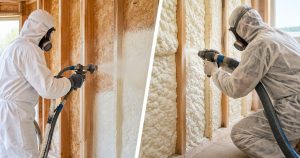
Your protective gear must include gloves, goggles, masks, and scrub suits to prevent skin irritation and protect against inhalation of fumes. Confirm proper ventilation throughout the workspace to minimize exposure to harmful vapors. You'll require an applicator gun for precise foam distribution, a utility knife for trimming excess material, and weatherproof sealants to seal any gaps. Before beginning, verify your canister's expiration date and maintain temperatures between 21°C to 32°C for peak foam performance. Following manufacturer guidelines for equipment usage and safety practices isn't optional – it's crucial for achieving professional results while maintaining strict safety standards during application.
Step-by-Step Application Process
A successful spray foam insulation application requires meticulous attention to surface preparation and precise execution. When working with spray foam kits, you'll need to follow specific steps to achieve ideal insulation performance.
- Begin by thoroughly cleaning surfaces in the application area, making certain they're dry and debris-free, with proper ventilation to prevent fume accumulation.
- Mix the kit components according to manufacturer specifications, maintaining precise ratios for best performance.
- Apply the foam using a consistent spraying technique, maintaining 12-18 inches of distance for even coverage.
After application, allow 24 hours for complete curing time. Once cured, you'll need to trim excess foam using a utility knife to achieve a professional finish and guarantee proper sealing of the insulated area. This final step is essential for maximizing the insulation's effectiveness.
Cost Analysis and Savings
While professional installation carries premium costs, DIY spray foam insulation kits offer substantial financial advantages for budget-conscious homeowners. You'll find these kits priced between $300 to $1,500, compared to professional installation costs of $1,500 to $3,500. The initial investment delivers compelling energy savings, potentially reducing your utility bills by over 30%.
Your cost analysis should factor in the payback period of 3 to 7 years, during which energy efficiency improvements offset the upfront insulation costs. It's essential to research local building codes before starting your project to prevent unexpected expenses. Beyond immediate savings, DIY spray foam kits contribute to increased home value through improved energy efficiency. This budget-friendly option proves particularly attractive when you consider the long-term financial benefits against the modest initial investment.
Local Climate Considerations
Regional climate patterns directly impact your spray foam insulation choices and installation requirements. Calgary's extreme temperature fluctuations, from -15°C winters to warm summers, demand superior insulation performance. Closed-cell spray foam particularly suits our local climate, offering both thermal protection and moisture barrier properties vital for our dry environment.
Key local climate factors affecting your DIY kit selection:
- Calgary's wide temperature range requires insulation that maintains consistent R-value performance year-round
- Low humidity levels make moisture barrier properties significant, making closed-cell foam ideal
- Variable weather patterns necessitate complete air seal protection against drafts
Consider these climate-specific requirements while ensuring your DIY installation meets local building codes. Proper application will enhance energy efficiency and reduce utility bills, offering up to 30% savings in Calgary's demanding climate conditions.