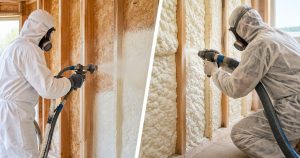
High-density spray foam provides exceptional insulation for Calgary's demanding climate, offering R-values of 6-7 per inch and creating an impenetrable barrier against moisture and air leakage. You'll benefit from up to 70% reduction in energy costs while maintaining consistent indoor temperatures throughout extreme weather fluctuations. The closed-cell foam structure reinforces your property's integrity and meets National Building Code – Alberta Edition requirements. Professional installation guarantees proper adhesion and performance, requiring 24-hour vacancy during curing. Beyond immediate comfort improvements, this solution delivers long-term sustainability benefits and qualifies for energy efficiency incentives that help offset your investment.
Key Takeaways
- High-density spray foam in Calgary provides R-values of 6-7 per inch, offering superior insulation for extreme temperature fluctuations.
- Professional installation requires 24-hour vacancy during curing and must comply with National Building Code – Alberta Edition standards.
- Local installations can reduce energy bills by up to 70% while qualifying for Calgary energy efficiency support programs.
- Closed-cell spray foam effectively protects below-grade areas from moisture, making it ideal for Calgary's basement applications.
- Installation process includes site preparation, moisture assessment, and adhesion testing to ensure optimal performance in Calgary's climate.
Understanding High-Density Spray Foam Properties
High-density spray foam stands as a pinnacle of modern insulation technology, delivering exceptional thermal resistance with R-values of 6 to 7 per inch. You'll find this superior insulation solution particularly effective in maximizing energy efficiency within limited space constraints.
When applied, the high-density spray foam expands to create an impenetrable barrier, excelling in air sealing by filling every crack and crevice. This thorough coverage prevents moisture infiltration while establishing a robust vapor barrier that protects your structure from mold and mildew development. The foam's structural properties contribute to your building's integrity, reinforcing walls and roofs without compromising over time. Unlike traditional insulation materials, you won't experience settling or shrinkage, ensuring consistent performance throughout the material's lifecycle. This combination of high R-value and durability makes it an ideal choice for Calgary's demanding climate conditions.
Applications in Calgary's Climate
While Calgary experiences dramatic temperature swings throughout the year, properly installed spray foam insulation provides exceptional climate control for your property. High-density spray foam's ability to expand and create an airtight seal directly addresses your home's vulnerability to Calgary's climate extremes.
You'll find closed-cell spray foam particularly effective in below-grade areas, where it protects your basement from moisture infiltration during wet seasons. The insulation's superior R-value per inch can reduce your energy consumption by up to 70%, translating to substantial savings on heating and cooling costs. When you're installing high-density spray foam in your Calgary home, verify it meets the National Building Code – Alberta Edition requirements. The insulation's capacity to fill gaps and prevent air leakage makes it a highly effective solution for maintaining consistent indoor temperatures despite Calgary's variable weather patterns.
Cost Benefits and Energy Savings
The investment in high-density spray foam delivers substantial returns through energy cost reductions and improved thermal efficiency. You'll see up to 70% reduction in energy bills when choosing cost-effective installation methods, maximizing your home's insulation performance. The exceptional R-7 per inch value of closed-cell foam guarantees peak energy efficiency even in tight spaces.
The financial benefits extend beyond monthly savings. You'll experience fewer heating and cooling system repairs due to improved insulation performance, while qualifying for energy efficiency support programs that help offset initial costs. The airtight seal created by high-density spray foam eliminates air leaks, maintaining consistent indoor temperatures and reducing long-term energy consumption. This all-encompassing approach to insulation makes high-density spray foam a smart investment for Calgary homeowners seeking lasting economic advantages.
Installation Process and Requirements
Successful spray foam installation begins with thorough site preparation and professional assessment. You'll need to clear your space of personal belongings and debris to guarantee ideal access for the installation process. Before your insulation project starts, contractors will address any existing moisture issues, particularly in exterior walls, to prevent future complications.
Your contractor will perform a small area spray test to verify proper adhesion and performance. During the actual installation, high-density spray foam insulation is applied systematically throughout the designated areas. Once completed, you must vacate the premises for at least 24 hours while the foam cures and off-gassing occurs. The final step involves installing an approved thermal barrier over all spray foam surfaces to meet building code requirements and guarantee safety compliance.
Environmental Impact and Sustainability
Modern sustainability demands drive Calgary homeowners toward high-density spray foam insulation as an environmentally conscious choice. By choosing this insulation method, you'll reduce your building's energy consumption by up to 70%, considerably lowering greenhouse gas emissions. The installation of closed-cell spray foam prevents moisture intrusion while maintaining superior indoor air quality.
Manufacturers now offer eco-friendly options made with sustainable materials, containing no harmful chemicals. This commitment to environmental stewardship extends beyond immediate benefits, as the durability of high-density spray foam reduces replacement frequency and resource consumption. Your choice of spray foam insulation also supports LEED certification goals through improved energy efficiency and reduced resource use. When you're prioritizing sustainable building practices in Calgary's climate, high-density spray foam delivers both environmental protection and long-term performance advantages.
Comparing Insulation Material Options
Building on these environmental benefits, understanding how high-density spray foam compares to other insulation materials helps you make informed decisions for your Calgary property.
When you're comparing insulation options, high-density spray foam stands out with its superior R-value of 6.5 to 7.0 per inch, greatly outperforming traditional materials. Closed cell spray foam's exceptional vapor barrier properties make it particularly effective for Calgary's climate, especially in basements and crawl spaces where moisture control is vital. Unlike fiberglass or cellulose, your Calgary spray foam installation won't settle or degrade over time, maintaining its performance throughout your building's lifecycle. While open cell foam offers a cost-effective alternative for wall and ceiling cavities, high-density spray foam's extensive benefits – including meeting National Building Code standards – make it a compelling choice for your insulation needs.
Maintenance and Long-Term Performance
While many insulation materials require extensive upkeep, high-density spray foam maintains its performance with minimal maintenance requirements. You'll find that its consistent R-value and non-settling properties contribute to superior long-term performance, potentially reducing your insulation costs through sustained energy efficiency.
To enhance your investment's longevity, you'll need to schedule regular inspections to check for moisture issues and verify the thermal barrier's integrity. Although high-density spray foam doesn't shrink or settle like traditional materials, proper installation by qualified technicians is essential for peak performance. You can expect energy savings of up to 70% when the foam is correctly installed and maintained. Remember to conduct routine visual checks for wear or damage, ensuring your insulation continues to provide effective air sealing throughout your building's lifetime.