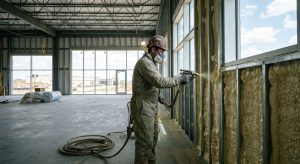
When installing spray foam insulation in Calgary, you'll need to comply with CAN/ULC-9705.1 and CCMC 14036-R standards. Your installation must include proper thermal barriers and intumescent coatings like DC315 between living spaces and the insulation material. You'll also need to maintain minimum R22 (RSI 3.08) ratings for above-ground framed walls and guarantee proper ventilation systems. Your contractor must hold current certification and provide detailed documentation of compliance measures. Regular inspections are mandatory to verify adherence to building codes and safety regulations. The complexities of these requirements underscore the importance of understanding Calgary's thorough spray foam safety protocols.
Key Takeaways
- All spray foam installations must meet CAN/ULC-9705.1 and CCMC 14036-R standards while maintaining minimum R22 rating for above-ground walls.
- Intumescent coatings like DC315 are mandatory for spray foam applications to ensure fire safety compliance in Calgary.
- Professional certification is required for spray foam installers, including specific training on safety standards and installation techniques.
- Thermal barriers must be installed between spray foam insulation and living spaces, with regular inspections to verify compliance.
- Documentation of compliance measures, including material certifications and installation records, must be maintained throughout the project lifecycle.
Building Code Standards for Insulation
When constructing or renovating buildings in Calgary, you'll need to comply with the 2023 Alberta Building Code's strict insulation requirements. Above-ground framed walls must achieve a minimum R22 (RSI 3.08) rating to meet energy efficiency standards. If you're using spray foam insulation, it must conform to CAN/ULC-9705.1 and CCMC 14036-R standards.
The National Building Code requires thermal barriers for all insulation materials, with specific attention to spray foam applications requiring intumescent coatings like DC315. You'll find improved options such as mineral stone wool or extruded polystyrene (XPS) particularly effective for exterior wall applications. Remember to implement proper ventilation and moisture control measures when insulating attics to prevent mold growth and maintain insulation effectiveness over time.
Types of Spray Foam Applications
Depending on your insulation needs, you'll encounter two distinct types of spray foam applications in Calgary's construction market: open-cell and closed-cell formulations.
When installing open-cell spray foam insulation in your interior walls and ceilings, you'll benefit from its flexibility and sound-dampening properties, though it offers lower R-values. For exterior applications, closed-cell foam provides superior moisture resistance and structural rigidity, making it ideal for roofs and foundations. Both types must comply with fire safety regulations under the National Building Code, requiring thermal barriers between the foam and living spaces. You'll need to verify proper installation of intumescent coatings like DC315 to meet these requirements. Understanding these applications helps you make informed decisions while maintaining compliance with Calgary's building standards.
Safety Requirements and Inspections
Three critical safety requirements govern spray foam installations in Calgary's building sector. You'll need to guarantee your installation complies with CAN/ULC-9705.1 and CCMC 14036-R standards, which are mandatory for fire safety compliance. Furthermore, you must install a thermal barrier between medium-density polyurethane spray foam and living spaces.
To maintain building code compliance, you'll need regular inspections of your spray foam installations. These inspections verify proper application of thermal barriers and comprehensive adherence to safety requirements. If you don't comply with these regulations, you're risking serious legal penalties and insurance complications. Your documentation must demonstrate ongoing compliance with fire safety standards, and you'll need to keep detailed records of all inspections. Professional inspectors will verify that your spray foam products meet current safety regulations and building codes.
Environmental Considerations and Compliance
As you implement spray foam insulation in Calgary, you'll need to satisfy rigorous environmental compliance standards while meeting the 2023 Alberta Building Code requirements. Your selection of environmentally friendly materials must prioritize both indoor air quality and energy efficiency, incorporating low-VOC products that align with CCMC 14036-R standards.
| Component | Environmental Impact | Compliance Requirement |
|---|---|---|
| Insulation | Low-VOC Emissions | CAN/ULC-9705.1 |
| Barriers | Air Quality Control | DC315 Certification |
| Documentation | Energy Performance | Technical Data Review |
| Installation | Sustainability | Local Authority Approval |
You'll need to maintain detailed documentation of your compliance measures, including technical specifications and approval certificates. The integration of renewable energy technologies with your spray foam installation further supports Calgary's environmental initiatives while maximizing building performance and meeting regulatory requirements.
Professional Certification and Training
Professional certification stands as a fundamental requirement for spray foam installers operating in Calgary, with strict adherence to the 2023 Alberta Building Code and CCMC guidelines. You'll need to complete thorough training programs that cover crucial safety standards and proper installation techniques, including specific requirements for intumescent coatings and thermal barriers under CAN/ULC-9705.1.
Your certification process involves both theoretical knowledge and hands-on experience with specialized materials. Industry organizations and manufacturers offer these training programs to guarantee you're equipped with current installation methods and safety protocols. To maintain your professional certification, you'll need to pursue continuing education to stay updated on evolving regulations and technological advancements. This ongoing commitment guarantees your work consistently meets Calgary's building codes and safety requirements.
Installation Best Practices
Proper installation of spray foam insulation demands strict adherence to CAN/ULC-9705.1 and CCMC 14036-R standards in Calgary's building environment. You'll need to incorporate vital safety measures, including the application of thermal barriers like DC315, to maintain building code compliance.
| Installation Requirement | Safety Measure |
|---|---|
| Standards Compliance | CAN/ULC-9705.1 & CCMC 14036-R |
| Thermal Protection | DC315 intumescent coating |
| Application Protocol | Follow manufacturer thickness specs |
| Ventilation Control | Guarantee proper airflow during install |
| Inspection Schedule | Regular monitoring for degradation |
You're required to maintain precise application thickness and curing times according to manufacturer specifications. Proper ventilation isn't just a recommendation—it's imperative for chemical safety and moisture control. Your installation must include regular inspections to verify the foam's integrity and continued compliance with fire safety regulations.