To address spray foam toxicity in Calgary's climate, you'll need a multi-faceted approach focusing on proper installation and monitoring. Professional contractors must use complete PPE and follow strict ventilation protocols during application, as spray foam releases harmful VOCs and isocyanates that can cause respiratory issues. Calgary's temperature fluctuations require careful timing for installation, while moisture levels can affect curing and off-gassing. You should implement air quality testing before, during, and after installation to measure isocyanate concentrations and VOC levels. HEPA filtration and professional remediation services offer solutions when problems arise, while understanding all available options helps you make informed decisions about your insulation needs.
Key Takeaways
- Calgary's winter climate requires careful timing and temperature control during spray foam installation to prevent toxic off-gassing issues.
- Professional air quality testing before and after installation helps detect harmful VOCs and isocyanates in Calgary homes.
- Proper ventilation systems and PPE are essential during installation to protect against respiratory risks in Calgary's varying climate conditions.
- Certified remediation experts can remove toxic spray foam particulates using HEPA-filtered vacuum extraction and continuous monitoring.
- Regular indoor air quality monitoring identifies potential health risks from spray foam off-gassing throughout Calgary's seasonal temperature changes.
Understanding Spray Foam Health Risks
While spray foam insulation offers excellent thermal protection, it poses significant health risks that demand careful consideration. The release of volatile organic compounds and isocyanates during installation can trigger respiratory issues, including occupational asthma and chemical sensitivities. You'll need to understand that improper installation considerably impacts indoor air quality through off-gassing, which may lead to chronic health complications.
Studies show that diisocyanates in spray foam rank among the leading causes of workplace asthma, making proper ventilation and personal protective equipment essential. The chemical compounds can bioaccumulate in your body when you're exposed to installation dust, potentially resulting in long-term health effects. Research indicates that even post-installation, some individuals experience severe reactions to spray foam insulation, highlighting the importance of professional application and thorough safety protocols.
Safe Installation Best Practices
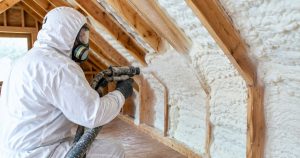
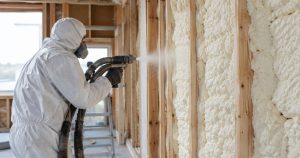
Because spray foam installation carries inherent health risks, implementing extensive safety protocols becomes essential for both installers and occupants. You'll need to verify proper ventilation systems are in place to minimize potential risks from dust particles and chemical vapors during application.
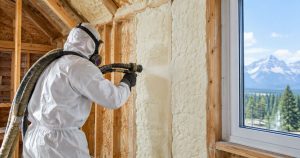
When working with spray foam, you must wear complete PPE, including N95 respirators, protective eyewear, and gloves. Your installation team should strictly follow manufacturer guidelines for mixing and applying the foam to prevent health impacts from improper application. Local exhaust ventilation becomes vital to capture airborne contaminants during the process.
To confirm the foam is properly installed, you'll need trained professionals who understand safe use protocols and immediate cleanup procedures. This methodical approach helps reduce exposure risks while guaranteeing peak insulation performance for Calgary homes.
Calgary Climate Impact Considerations
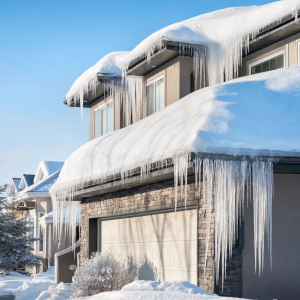
Since Calgary's distinct climate demands robust insulation solutions, understanding the environmental factors affecting spray foam performance becomes critical for your installation decisions. You'll need to take into account how spray foam products interact with your indoor environment across seasonal temperature extremes.
| Season | Climate Impact | Installation Considerations |
|---|---|---|
| Winter | Below freezing | HVAC systems require ideal sealing |
| Spring | High moisture | Chemicals can cause curing issues |
| Summer | Heat expansion | Potential health concerns from off-gassing |
| Fall | Temperature fluctuation | Installation can cause air quality impact |
Your home's energy efficient performance depends on proper spray foam application timing and temperature control. When planning installation, you'll need to factor in Calgary's unique weather patterns to guarantee proper curing and minimize off-gassing risks. This includes coordinating with your HVAC systems for adequate ventilation during and after application.
Home Air Quality Testing
How effectively are you monitoring your home's air quality during and after spray foam installation? Home air quality testing is vital for detecting harmful spray foam dust and volatile organic compounds that can trigger breathing problems in your living space.
You'll need to measure isocyanate concentrations and track VOC levels to assess potential health risks from your spray foam insulation. Regular indoor air quality monitoring helps you identify off-gassing issues before they compromise your healthy home environment. By implementing HEPA vacuuming during remediation, you're taking proactive steps to reduce airborne toxins.
To guarantee testing accuracy, you should conduct baseline assessments before and after remediation work. These measurements provide concrete data to verify that your interventions are effectively maintaining safe air quality standards and protecting your household from spray foam-related health concerns.
Professional Remediation Solutions
When professional remediation becomes necessary, you'll need an extensive assessment protocol to address spray foam toxicity concerns effectively. Certified professionals employ systematic approaches to evaluate indoor air quality and implement targeted solutions that minimize health risks associated with spray polyurethane foam exposure.
Key remediation steps include:
- Pre-remediation baseline testing for air quality metrics
- HEPA-filtered vacuum extraction of foam particulates
- Continuous monitoring during cleanup operations
- Post-remediation verification testing
Despite the benefits of spray foam insulation, proper remediation guarantees your indoor environment remains safe. Professional services in Calgary utilize advanced testing equipment to detect harmful substances and implement thorough cleaning protocols. This methodical approach helps restore peak air quality while documenting improvements through comparative assessments, guaranteeing your space meets safety standards.
Alternative Insulation Options
While spray foam insulation presents potential health risks, several proven alternatives offer comparable thermal performance with reduced toxicity concerns. You'll find multiple options that prioritize both energy efficiency and indoor air quality, eliminating the risk of lung damage associated with spray foam chemicals.
| Material Type | Key Benefits |
|---|---|
| Fiberglass | Non-combustible, moisture-resistant |
| Cellulose | Eco-friendly, contains flame retardants |
| Mineral Wool | Fire-resistant, sound-absorbing |
| Natural Fiber | Chemical-free, improves air quality |
These alternative insulation materials provide excellent thermal protection while maintaining healthier indoor environments. Fiberglass remains the most widely used option, while cellulose offers superior environmental benefits through recycled content. Mineral wool excels in fire protection, and natural fibers like sheep's wool and cotton deliver chemical-free performance, making them ideal for health-conscious homeowners.