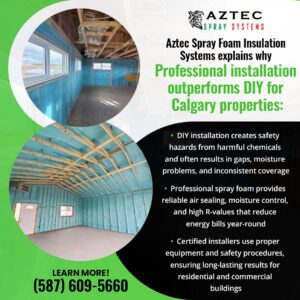
You'll need to weigh several key factors when deciding between DIY and professional spray foam insulation installation. While DIY kits offer cost savings at $0.50-$2.00 per board foot compared to professional rates of $1.00-$3.00, they require significant safety equipment and technical expertise. Small projects under 200 board feet can be manageable DIY, but larger installations demand professional contractors for code compliance and ideal results. Professional installers provide advanced equipment, certified expertise, and extensive warranties that guarantee long-term performance. Safety concerns, including proper ventilation and protective equipment, should heavily influence your decision. The following details will help you make an informed choice for your specific project needs.
Key Takeaways
- Small projects under 200 board feet are cost-effective for DIY, while larger installations require professional expertise for optimal results.
- DIY kits cost $0.50-$2.00 per board foot versus professional installation at $1.00-$3.00, but require additional equipment purchases.
- Professional contractors provide warranties, code compliance, and superior results through advanced equipment and certified expertise.
- Safety risks from hazardous fumes require proper protective equipment, which professionals routinely provide and properly implement.
- Continuous spraying is crucial for proper installation, as brief pauses can clog equipment and compromise insulation quality.
Understanding DIY Spray Foam Basics
While spray foam insulation offers excellent thermal protection and air sealing capabilities, understanding the DIY basics is vital before tackling any installation project. You'll find DIY kits at your local home improvement store, costing between $0.50 to $2.00 per board foot – considerably less than professional installation rates.
However, precision application is critical for success. You'll need to maintain continuous spraying, as pausing for just 30 seconds can clog the nozzle and waste materials. Safety precautions are non-negotiable; always wear proper PPE including masks, gloves, and goggles to protect against chemical exposure. While DIY spray foam is a cost-effective option for small insulation projects like window and door sealing, larger jobs may require professional expertise to guarantee building code compliance and proper installation techniques.
Professional Installation Benefits
Although DIY spray foam projects can save money on small jobs, professional installation delivers superior results through advanced equipment and certified expertise. Licensed contractors utilize sophisticated rigs worth up to $100,000, guaranteeing precise application and maximum efficiency. Their experience with building codes and structural issues certifies compliant, high-performance insulation that meets energy standards.
- You'll get peace of mind with all-encompassing warranties protecting your investment
- You'll avoid costly mistakes that could compromise your home's efficiency
- You'll benefit from rapid project completion, even in enclosed walls
- You'll receive expert assessment of potential mold and pest problems
Professional contractors bring valuable technical knowledge to every project, identifying and addressing underlying issues that could affect insulation performance. Their certification and specialized equipment guarantee your installation meets industry standards while maximizing energy efficiency and long-term value.
Cost Comparison Between Options
Considering both upfront and long-term costs reveals significant price variations between DIY and professional spray foam installations. When you're comparing DIY spray foam projects to hiring a contractor, you'll find that initial savings can be substantial, with DIY costs ranging from $0.50 to $2.00 per board foot versus professional installation at $1.00 to $3.00.
| Cost Factor | DIY Installation | Professional Installation |
|---|---|---|
| Price/Board Foot | $0.50-$2.00 | $1.00-$3.00 |
| Equipment Needs | Safety gear, tools, rentals | Included |
| Labor Costs | None | Included |
| Energy Efficiency | Variable results | Guaranteed performance |
However, you'll need to factor in unforeseen costs like safety equipment and potential equipment rentals for DIY projects. While foam insulation contractors charge more upfront, their expertise often delivers superior energy efficiency and long-term savings.
Safety and Equipment Requirements
Because spray foam insulation involves chemical compounds that can pose health risks, proper safety equipment and protocols are essential for any installation. While DIY kits are available, they often don't include the necessary personal protective equipment you'll need. Professional contractors come prepared with specialized safety equipment and follow strict safety protocols to guarantee proper installation.
- You're exposed to hazardous fumes without adequate protection
- Your health could be compromised by improper ventilation
- You'll lack insurance coverage if installation errors occur
- You're responsible for sourcing all safety equipment separately
When working with spray foam, you'll need thorough personal protective equipment, including respiratory masks, protective eyewear, and chemical-resistant gloves. Professional contractors not only bring expertise but also maintain proper ventilation systems and safety measures that protect both installers and occupants during and after installation.
Project Size Considerations
When evaluating spray foam insulation projects, size directly impacts your choice between DIY installation and professional services. For small projects under 200 board feet, DIY spray foam kits prove cost-effective, particularly when sealing gaps around doors and windows.
Larger projects demand professional installation, especially when dealing with enclosed walls or removing existing insulation. The complexity of the project plays a significant role in this decision. While you can handle straightforward applications yourself, intricate installations require a contractor's expertise to secure ideal insulation performance.
Before starting, assess your project's scope carefully. If you're working with limited areas and simple applications, the DIY approach can save money while delivering satisfactory results. However, extensive coverage areas or technically demanding installations warrant hiring a contractor to guarantee proper installation and code compliance.