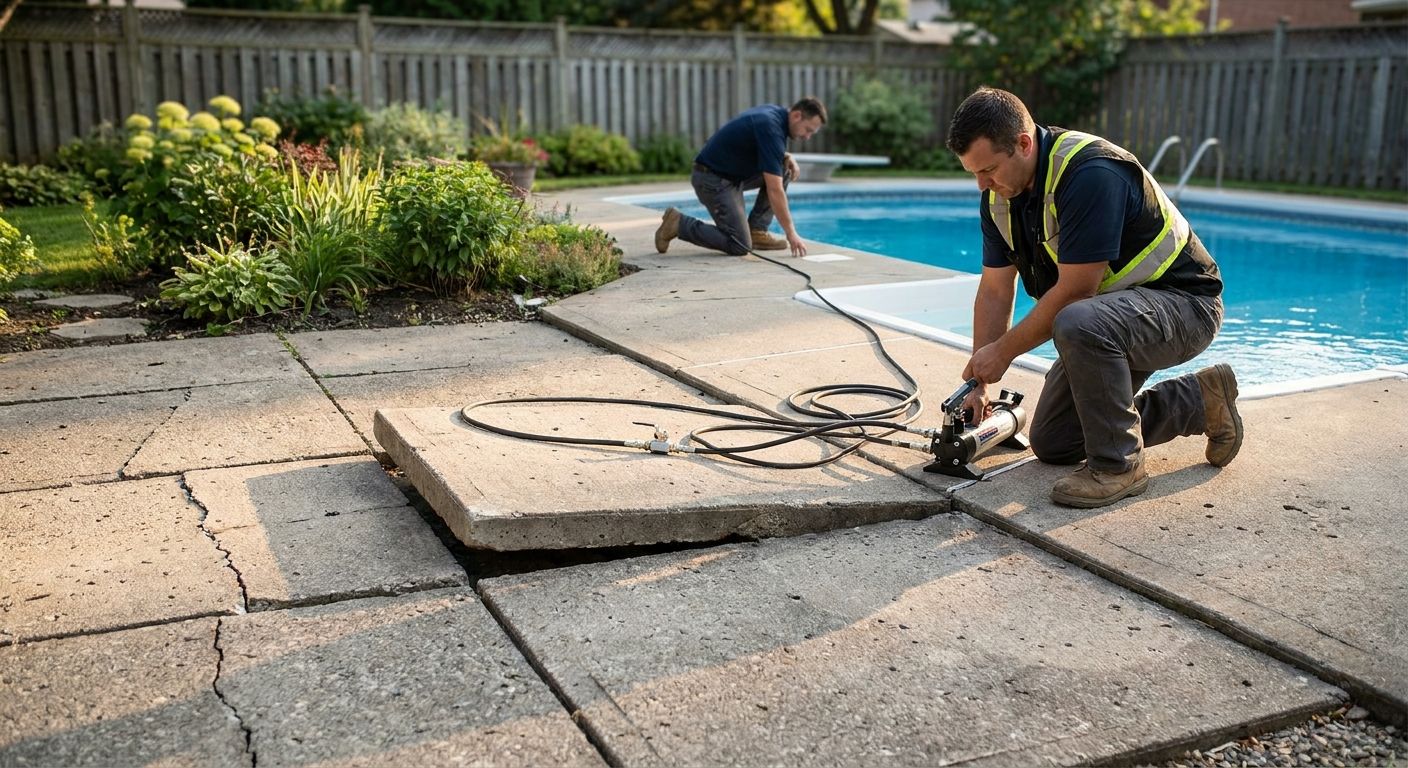
Sunken patio slabs and tilting pool decks are common after Alberta winters, and lifting the existing concrete instead of tearing it out saves both money and a full season of backyard access. This guide breaks down what actually matters when you're comparing concrete lifting for patios and pool decks so you don't pay for a fix that settles again by next spring.
- Polyurethane foam injection is the strongest option for concrete lifting patio pool deck jobs in 2026 — cures in about 15 minutes. Buy.
- Mudjacking slurry weighs over 100 lbs per cubic foot and can trigger re-settling under pool decks. Consider only for large, low-stakes patios.
- Full slab replacement costs more time and closes pool access for days — Skip unless the concrete is structurally cracked.
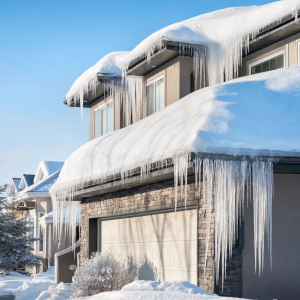
- Alberta’s freeze-thaw cycles are the real cause of most sunken slabs, so any fix that ignores soil and drainage is temporary.
Why this matters
A sunken patio slab or a pool deck that's pulled away from the coping isn't just cosmetic. Water pools toward the house instead of away from it, tripping hazards show up right where bare feet walk around a pool, and every winter the gap under the slab widens as freeze-thaw cycles push more soil out from underneath.
Calgary, Okotoks, High River, and Lethbridge all see the same pattern: clay-heavy soil expands and contracts hard through Alberta winters, and concrete poured on grade moves with it. Concrete lifting patio pool deck repairs done right address the void under the slab, not just the crack on top.
Who this is for
This guide is for homeowners in southern Alberta with a patio, pool deck, or pool surround that has visibly sunk, tilted, or separated at a joint — but the slab itself is still in one piece. If your concrete is cracked into pieces or heaved more than a couple of inches, replacement is the more honest answer and lifting won't hold. For everyone else, foam or mudjacking is worth pricing out before a full tear-out.
What to look for in concrete lifting for patios and pool decks
Foam density matched to the load
A pool deck carries different weight and moisture exposure than a patio slab tucked against the house. Ask what density foam gets used and whether it's rated for exterior, moisture-exposed slabs — not just interior garage floors. The wrong density either underlifts a heavy deck or over-pressurizes a thinner patio pour and cracks it further.
Injection hole size and pattern
Smaller holes, typically around 5/8 inch, mean less visible patching once the job is done. A contractor drilling large holes on a 4-inch decorative patio slab is treating it like a driveway, and the patch pattern will show for years.
Cure and return-to-use time
For pool decks specifically, this is the number that matters most. Polyurethane foam sets up in minutes and the slab can typically bear weight within an hour, which matters if you're trying to get a pool open on a 2026 summer weekend. Mudjacking's cement slurry takes much longer to cure fully, even though it can sometimes be walked on sooner.
Track record with Alberta clay and freeze-thaw
A method that works in a stable, sandy-soil market doesn't automatically work the same way over expansive clay. Ask whether the crew has lifted slabs specifically in Calgary, Okotoks, High River, or Lethbridge conditions, where the freeze-thaw cycle repeats every winter and can undo a lazy fix in one season.
Whether the cause gets addressed
Lifting a slab without checking drainage, downspout discharge, or soil erosion underneath just resets the clock. A contractor who inspects grading and water flow before injecting foam is fixing the problem; one who shows up and drills holes on the first visit is fixing the symptom.
Warranty and post-lift monitoring
Settling can recur, especially on pool decks where moisture exposure is constant. Ask what's covered if the slab moves again within a defined period, and get it in writing before work starts.
Top lifting methods to consider
Polyurethane foam injection — the modern standard. Foam expands to fill voids at roughly 2 lbs per cubic foot, a fraction of the weight of cement slurry, which matters because added weight is exactly what causes many slabs to sink in the first place. Cure time runs about 15 minutes, with the slab typically load-ready within the hour. Aztec Spray Systems uses this method for patio and pool deck lifting across Calgary and surrounding communities. Buy.
Mudjacking — the old-school fallback. Cement-based slurry is pumped under the slab to raise it, and it's often cheaper up front for large, low-detail slabs like a plain garage apron. The catch: slurry weighs over 100 lbs per cubic foot, and that extra load can accelerate the next settling cycle on soil that's already unstable. Consider for large utility slabs only, Skip for pool decks and any slab near a foundation.
Full slab replacement — the nuclear option. Tearing out and repouring fixes structural cracking that lifting can't, but it means 2-3 days of pool or patio closure and materially higher cost than injection. Reserve this for slabs broken into multiple pieces or heaved more than 2 inches. Skip unless lifting genuinely won't hold.
DIY leveling compound — the tempting shortcut. Surface-applied compounds smooth out a slight dip but do nothing for the void underneath the slab. Within a season or two, especially through another Alberta freeze-thaw cycle, the same low spot reappears. Skip for anything beyond a cosmetic touch-up.
Get your slab assessed before winter
Licensed concrete lifting for patios and pool decks across Calgary, Okotoks, High River, and Lethbridge.
What to avoid
- A quote with no drainage inspection. If nobody checks where water is going before pricing the job, the fix is temporary by design.
- Mudjacking sold as the cheaper equivalent for a pool deck. The upfront price looks better, but the added slurry weight works against you on soil that's already moving.
- A contractor who won't say how they'll avoid rebar or plumbing lines. Pool decks often run electrical conduit or plumbing beneath the slab, and blind injection near those lines is a real risk.
Verdict comparison
| Method | Return-to-use time | Added weight | Best for | Verdict |
|---|---|---|---|---|
| Polyurethane foam | About 1 hour | ~2 lbs/cu ft | Pool decks, patios, moisture-exposed slabs | Buy |
| Mudjacking | Longer full cure | 100+ lbs/cu ft | Large, low-detail utility slabs | Consider |
| Full replacement | 2-3 days | N/A (new pour) | Cracked or heaved slabs | Skip unless necessary |
| DIY leveling compound | Same day | Minimal | Cosmetic dips only | Skip |
FAQ
What is concrete lifting for a patio or pool deck?
Concrete lifting raises a sunken slab back to level by filling the void underneath, usually with polyurethane foam or cement slurry, instead of removing and repouring the concrete. It’s a same-day fix for most residential patios and pool surrounds.
How much does concrete lifting cost in Calgary?
Cost depends on slab size, how deep the void is, and which method is used, so pricing varies job to job in 2026. Get a site-specific quote rather than relying on a general estimate.
Is polyurethane foam safe to use near a pool deck?
Yes, polyurethane foam is commonly used around pool decks because it’s lightweight and cures quickly without adding significant load to already-settled soil. It also resists moisture better than cement-based alternatives over time.
How long before I can use the pool after concrete lifting?
With polyurethane foam, the slab typically bears weight within about an hour of injection. Mudjacking usually requires a longer wait before the area sees regular foot traffic.
Can a sunken patio be fixed without full replacement?
Most sunken patios can be lifted rather than replaced, as long as the slab is still intact and not cracked into separate pieces. Lifting addresses the void underneath without the cost or downtime of a full tear-out.
Does concrete lifting actually work in Alberta’s freeze-thaw climate?
Yes, when the underlying drainage and soil issue is addressed alongside the lift, foam-based lifting holds up through repeated freeze-thaw cycles. Skipping that step is the main reason a lifted slab settles again.
What’s the difference between mudjacking and polyurethane foam lifting?
Mudjacking pumps a cement-based slurry under the slab and can weigh over 100 lbs per cubic foot, while polyurethane foam expands to fill the same void at roughly 2 lbs per cubic foot. The lighter foam is generally the better long-term choice on unstable soil.
How do I know if my slab needs lifting or full replacement?
If the slab is a single intact piece that has sunk or tilted, lifting is usually the right call. If it’s cracked into multiple sections or heaved more than about 2 inches, replacement is the more durable fix.
One last thing
The detail most homeowners miss: the reason a pool deck settles faster than a house patio isn't the concrete itself, it's constant moisture exposure from splash-out and pool chemistry working on the soil underneath year-round. That's also why the weight of the lifting material matters more on a pool deck than almost anywhere else on the property — a heavier slurry fix on already-saturated soil is fighting itself from day one.