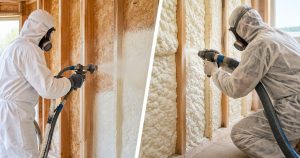
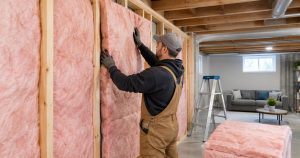
Calgary homes can benefit from several eco-friendly insulation options that meet local R22 wall requirements. You'll find cellulose insulation offers impressive performance with R-values of 3.6-3.8 per inch while utilizing 75-85% recycled content. Spray foam provides superior thermal resistance at R5.5-6.5 per inch, and fiberglass delivers reliable temperature regulation with up to 50% recycled materials. Your choice can qualify for the Canada Greener Homes Grant, helping offset installation costs. Professional installation through dry-blown, wet-spray, or dense-pack methods guarantees peak performance and energy savings. Understanding each material's unique properties will guide you toward the most sustainable solution for your home.
Key Takeaways
- Cellulose insulation provides R-values of 3.6-3.8 per inch, meeting Calgary's R22 wall requirements while using 75-85% recycled materials.
- Homeowners can access the Canada Greener Homes Grant to offset costs when installing eco-friendly insulation solutions.
- Dense-pack cellulose installation prevents settling and creates an effective thermal barrier, crucial for Calgary's extreme temperature variations.
- Spray foam insulation reduces energy consumption by up to 30% through superior air sealing properties.
- Regular moisture inspections and maintenance ensure long-term performance of eco-friendly insulation in Calgary's climate conditions.
Understanding Modern Insulation Materials
While traditional insulation methods have served their purpose, modern insulation materials offer unprecedented environmental benefits and performance capabilities. When you're considering eco-friendly options, cellulose insulation stands out with its 75-85% recycled paper fiber content, making it a leader in sustainable building materials. You'll find its R-value of 3.6-3.8 per inch delivers exceptional thermal performance for your home.
Spray foam insulation provides another cutting-edge solution, potentially reducing your energy consumption by up to 30% through its superior air sealing properties. For those prioritizing safety alongside efficiency, fiberglass insulation offers non-combustible characteristics while maintaining effective temperature regulation. Each material undergoes specific manufacturing processes, such as cellulose's hammer-milling and chemical treatment with boric acid, ensuring both durability and environmental responsibility in modern construction applications.
Environmental Benefits of Cellulose Insulation
Since sustainability drives modern construction practices, cellulose insulation emerges as a leading eco-friendly solution with its remarkable 75-85% recycled paper content. You'll find this sustainable choice among insulation materials offers significant environmental advantages while maintaining excellent performance.
Consider these key environmental benefits:
- Low-energy manufacturing process that transforms post-consumer paper waste into effective insulation, reducing landfill burden
- Improved energy efficiency with an R-value of 3.6-3.8 per inch, lowering your home's carbon footprint through reduced heating and cooling needs
- Natural fire resistance through boric acid treatment, eliminating the need for harmful synthetic flame retardants
- Contribution to LEED certification goals while helping you achieve measurable reductions in utility costs
Your choice of cellulose insulation directly supports sustainable building practices while ensuring peak home performance.
Comparing Popular Eco-Friendly Options
As homeowners increasingly prioritize sustainable building materials, several eco-friendly insulation options compete for market dominance. When comparing insulation types, you'll find cellulose leading with 75-85% recycled content and an R-value of 3.6-3.8 per inch, making it a top choice for reducing energy bills.
While spray foam offers superior thermal insulation with R-values of 5.5-6.5 per inch, fiberglass provides a middle-ground solution with up to 50% recycled content and proven fire safety features. Mineral wool, derived from natural or recycled stone, stands out for its dual benefits of soundproofing and fire resistance. With the Canada Greener Homes Grant available, you can offset the costs of these sustainable options while improving your home's energy efficiency. Each material offers distinct advantages, allowing you to choose based on your specific needs and environmental goals.
Installation Methods and Best Practices
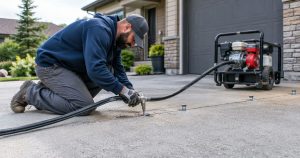
Proper installation techniques play a pivotal role in maximizing cellulose insulation's effectiveness. When installing this eco-friendly material in your wall assembly, you'll need experienced professionals who understand the specific requirements for peak performance.
To guarantee your cellulose insulation delivers its promised benefits, follow these critical installation practices:
- Choose between dry-blown, wet-spray, or dense-pack methods based on your specific wall assembly requirements
- Verify installers maintain proper density throughout the application to prevent future settling
- Select low-dust cellulose options to maintain a cleaner work environment during installation
- Schedule regular inspections to detect potential moisture build-up and address any settling issues promptly
Remember that professional installation isn't just about filling wall cavities—it's about creating an effective thermal barrier that'll maintain its performance over time while preventing potential complications from improper application.
Energy Savings Through Proper Application
When expertly installed, cellulose insulation delivers substantial energy savings by creating an effective thermal barrier throughout your home's envelope. With an impressive R-value of 3.6 to 3.8 per inch, you'll notice significant reductions in your heating and cooling costs when your wall cavities are properly filled.
To enhance your insulation needs, dense-packing techniques prevent settling and maintain consistent thermal performance over time. You'll benefit from the sustainable nature of cellulose, which contains 75-85% recycled paper fiber, while qualifying for government incentives like the Canada Greener Home Grant. To guarantee lasting energy efficiency, schedule regular inspections to check for moisture issues and maintain peak performance. With proper installation and maintenance, your cellulose insulation will continue delivering energy savings throughout its 20-30 year lifespan.
Climate Considerations for Calgary Homes
Due to Calgary's harsh winter climate, your home's insulation requirements demand careful consideration to maintain comfort and energy efficiency. When temperatures plummet below -10°C, proper insulation becomes vital for preventing heat loss and managing energy costs effectively.
To optimize your home's thermal performance in Calgary's climate, focus on these fundamental factors:
- Meet or exceed the mandated R22 value for above-ground walls, ensuring compliance with Alberta's Building Code
- Address basement walls with adequate insulation to prevent heat loss through your home's foundation
- Install sufficient attic insulation and ventilation to prevent ice damming, a common Calgary issue
- Consider eco-friendly options like cellulose insulation, which offers excellent thermal performance while reducing landfill waste
These measures will help protect your home against Calgary's extreme weather while supporting environmental sustainability.
Future of Sustainable Building Materials
As sustainable building practices continue evolving, the insulation industry is undergoing a significant transformation toward eco-friendly solutions. You'll see traditional batt insulation giving way to more sustainable alternatives, with cellulose leading the charge due to its superior recycled content of up to 85%.
The future of exterior wall insulation lies in groundbreaking technologies that combine improved performance with environmental responsibility. You're likely to benefit from new developments in closed cell and spray-applied systems that offer better thermal efficiency while maintaining high sustainability standards. With government incentives like the Canada Greener Home Grant and the growing importance of LEED certification, you'll find more options for reducing your home's environmental impact. These advancements in sustainable materials aren't just trends – they're becoming vital components of modern building practices, offering up to 30% reduction in energy consumption.